

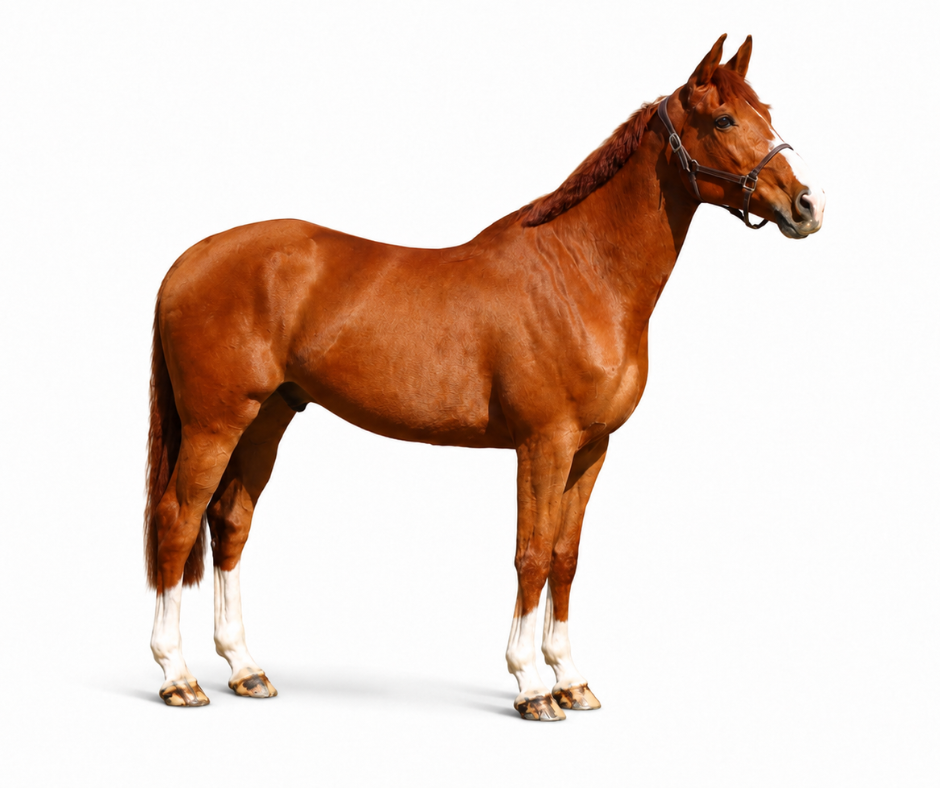
Some horses do not need to be the flashiest horse in the catalogue to become the most important horse in the story.
Qarasco was that kind of horse.
A 10-year-old gelding with experience around the 1.30m to 1.40m level, Qarasco had the profile of a horse many international buyers are quietly searching for but often struggle to find. He was kind. He was forgiving. He was reliable. He had enough experience to give confidence, enough quality to be useful, and enough character to make sense for a real rider.
In a market that often talks the loudest about scope, blood, and Grand Prix potential, Qarasco represented something just as valuable: trust.
That is what made his sale so meaningful for Bridl.
This was not only another horse leaving Europe. It was another step in Bridl’s growing connection with LATAM, a region where demand for quality European sport horses continues to build, but where the buying process still requires a high level of trust, communication, and support.
When a buyer imports a horse internationally, especially from Europe to Latin America, they are not just buying the horse. They are taking on distance, logistics, vetting decisions, currency risk, communication differences, transport, and the emotional uncertainty that comes with making a major purchase across borders.
In that context, the horse itself needs to reduce risk.
That is why Qarasco made sense.
He was not the kind of horse who needed to be explained through exaggerated language. His value was simple and clear. He was a forgiving gelding with proven experience, a kind attitude, and the ability to help his rider. For many amateur and developing international riders, that is exactly the horse they need.
The sport horse market often overvalues the spectacular and undervalues the usable. A huge jump is exciting. A dramatic video gets attention. A horse with endless scope can make people dream. But for a buyer who wants to compete, learn, enjoy the sport, and feel safe, the most valuable trait is often not extreme power. It is rideability.
Rideability is what turns potential into partnership.
A horse can jump 1.50m at home and still be wrong for the buyer. A horse can have a beautiful pedigree and still create stress in the ring. A horse can look impressive in a professional video and still not help the rider who actually needs to sit on him.
Qarasco was valuable because he was understandable.
For international buyers, especially in markets where there may be fewer local opportunities to try dozens of comparable horses, clarity matters. The buyer needs to know what the horse is, what the horse is not, and what kind of rider he will suit. This is one of the places where Bridl’s work becomes more than simply “selling horses.” It becomes interpretation.
Our role is to look at a horse and ask the questions behind the video.
Is he forgiving? Does he help the rider? Is he honest when the distance is not perfect? Does he become tense in a new environment? Is he more suitable for an ambitious junior, a confident amateur, or a professional? Is he the kind of horse who can travel and still make sense?
With Qarasco, the answer was clear. He was the kind of horse who could give someone confidence.
That type of horse has become one of the most commercially important profiles in the market.
Reliable 1.30m to 1.40m horses sit in a very interesting category. They are high enough in level to be serious sport horses, but not so specialized that they are only useful for a narrow professional buyer pool. They can serve amateurs, juniors, young riders, and international clients looking for a horse who can do the job without creating unnecessary drama.
This is especially important in LATAM.
Many Latin American buyers are ambitious and passionate, but the buying journey can be more complex because of geography. A European buyer might drive three hours and try five horses in a weekend. A LATAM buyer may need to rely heavily on video, trusted intermediaries, vet reports, and carefully managed logistics before making the decision to fly, import, or commit.
That changes the sales process.
It means trust becomes part of the product. It means the buyer is not only asking, “Is this horse talented?” They are asking, “Can I believe what I am being told?” “Is this horse suitable for me?” “Will this team support me through the process?” “Will the horse arrive as represented?”
Qarasco’s sale matters because it reflects exactly the kind of trust Bridl is trying to build.
It was also a meaningful internal moment. Every good sale is a team effort, and this one represented growth within the Bridl team as well. It was a reminder that building a global company is not only about opening markets, it is about developing people who can create relationships, manage details, and bring the right opportunities to life.
That part matters to me.
As a founder, I do not only want Bridl to be known for the number of horses we sell. I want Bridl to be known for how we sell them. I want the process to feel clearer, more transparent, more emotionally intelligent, and more aligned with the reality of the buyer and the horse.
Qarasco is a perfect example of that.
He was not marketed as something he was not. He was not forced into the wrong story. He was understood for what he truly offered: kindness, reliability, experience, and the ability to help his rider.
In many ways, those are the horses that define the real sport horse economy.
Grand Prix horses make headlines. Record auction prices create conversation. But the backbone of the industry is made up of horses like Qarasco, horses who allow riders to compete, learn, gain confidence, and stay in the sport. They are the horses that make the sport feel possible.
That is why their value should not be underestimated.
The market is changing. Buyers are more informed, more international, and more cautious. They want videos, records, vetting, transparency, and honest suitability assessments. They are less interested in being sold a fantasy and more interested in finding a horse who genuinely fits their life.
Qarasco fit.
His sale to LATAM is not only a nice success story. It is part of a bigger Bridl thesis: the future of sport horse sales belongs to people who can connect European supply with global demand in a way that feels personal, strategic, and trustworthy.
It is not enough to have access to horses.
You have to understand the buyer.
You have to understand the market.
And most importantly, you have to understand the horse.
Qarasco reminded us that sometimes the most valuable horse is not the one who makes the loudest impression. Sometimes it is the horse who quietly gives the rider exactly what they need.
And in international horse sales, that is everything.